Arab scientific heritage is a history of original production, translation and critical inquiry. Its Arabic-language traditions grew through a rich, multicultural world and made a material contribution to the development of Latin European and Western science.
Beyond the transmission of texts
Knowledge translated, questioned and developed.
Arabic became a major language of scholarship across diverse communities. Muslim, Christian and Jewish scholars, working alongside colleagues of different languages and backgrounds, participated in an intellectual culture shaped by Greek, Persian, Indian and other traditions.
Translation opened new possibilities, but it was not the end of the story. Scholars assessed inherited arguments, refined methods, made observations and produced new works. Their books and instruments are evidence of an active scientific culture, not simply a repository of earlier knowledge.
From the twelfth century, Arabic-to-Latin translation helped reshape European learning. That transmission involved selection, interpretation and further criticism: a shared history of science built through many places, languages and generations.
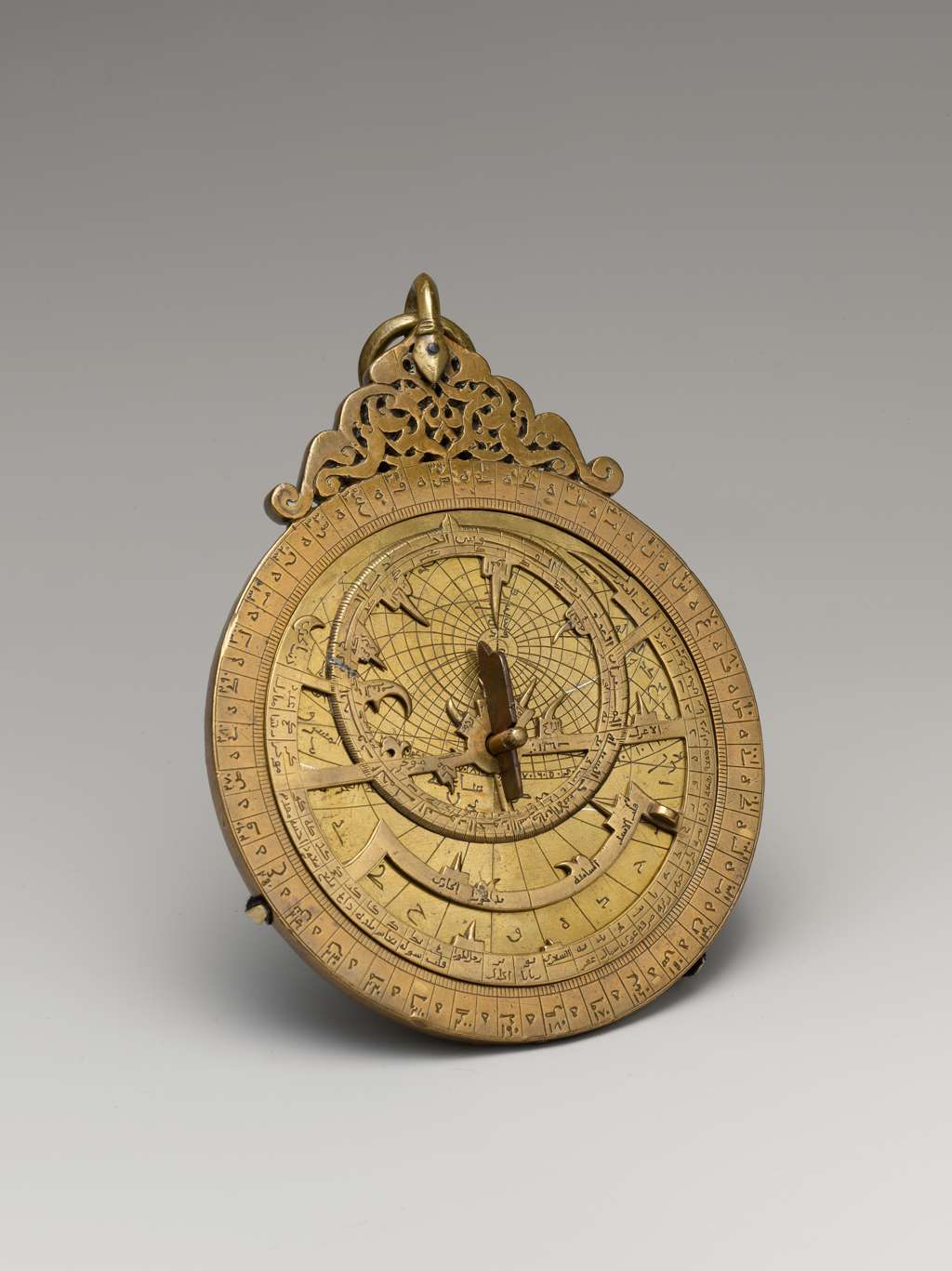
Astrolabe, Yemen, 1291. The Metropolitan Museum of Art, 91.1.535a–h, CC0. Documentary illustration.
Fields of achievement
Ideas that travelled. Methods that endured.
The history is best understood through particular works and disciplines, with their achievements and routes of transmission considered on their own terms.
01 / Mathematics
Algebra & systematic reasoning
Al-Khwarizmi's treatise on algebra set out systematic methods for solving equations. Its later Latin reception helped establish algebra as a field of European mathematical study, within a longer history of mathematical exchange.
02 / Optics
Light, vision & investigation
Ibn al-Haytham developed influential accounts of light and vision, combining mathematical analysis with investigation. The Latin tradition of his optics, known under the name Alhazen, informed medieval European discussions of sight and the study of light.
03 / Medicine
Knowledge organised for practice
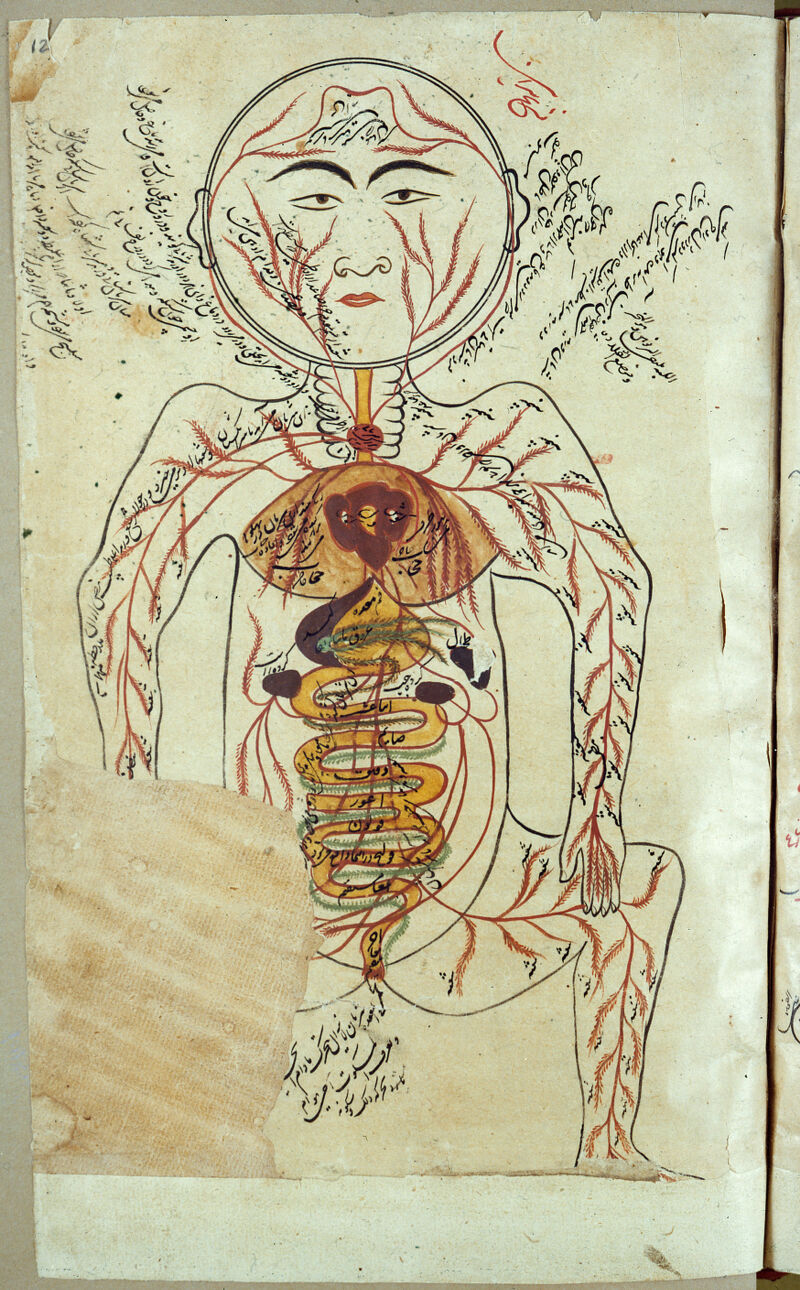
Avicenna's Canon of Medicine brought medical theory and practice into a comprehensive structure. In Latin translation, it became a major text in European university medicine and continued to be studied and debated into the Renaissance.
04 / Astronomy
Observation & original models
Astronomers working in Arabic-language traditions produced observations, tables and instruments, and critically examined inherited planetary theories. Original mathematical models demonstrate the creative character of this work and its place in the wider history of astronomy.
05 / Geography
Two distinct cartographic strands
Islamic geographical traditions combined mathematical geography, travel accounts and descriptions of regions. European maps of Arabia and the Arab world represent a separate strand, shaped by their makers' sources and perspectives. Both deserve attention; neither should be mistaken for the other.
06 / Translation
A multicultural language of learning
Translation into Arabic and, later, from Arabic into Latin connected scholarly communities. These exchanges helped transform European intellectual life while retaining the distinct contributions of authors, translators and readers across cultures.
Arabic medical manuscript, Wellcome Collection, MS Arabic 155. A documentary illustration of manuscript culture.
The material record
History, held in its original forms.
Books, manuscripts, maps and instruments make this intellectual history tangible. A printed edition can reveal a text's new readership; an instrument can connect abstract calculation with practical observation. Together, they invite careful study of how knowledge was made, used and shared.